Smart models probably don't need their own harness
It’s unclear whether harness really matters for coding agents. I frequently see claims that it does matter. Meanwhile I’ve done my own analysis showing that it doesn’t matter much.
One recent claim about harnesses came from Ramp. (Yes, the B2B SaaS. Anything that gets attention will be used to promote B2B SaaS). In their post, they ran agents both in their own harnesses and in a generic harness. Here is their chart of the differences:
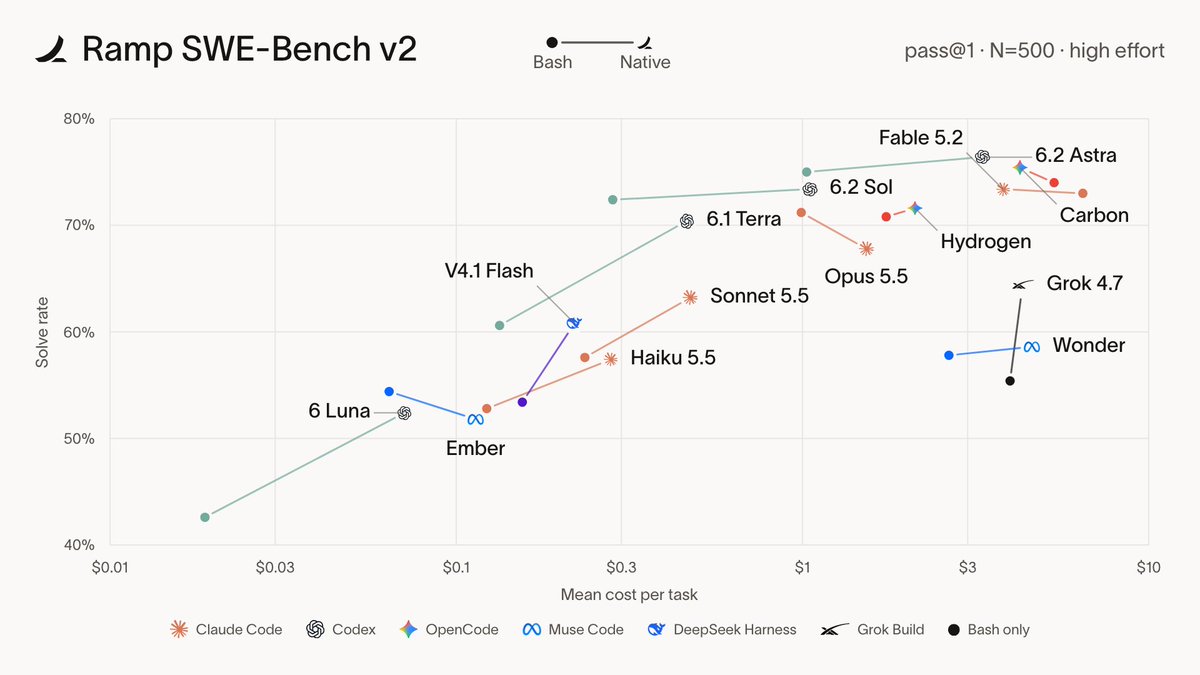
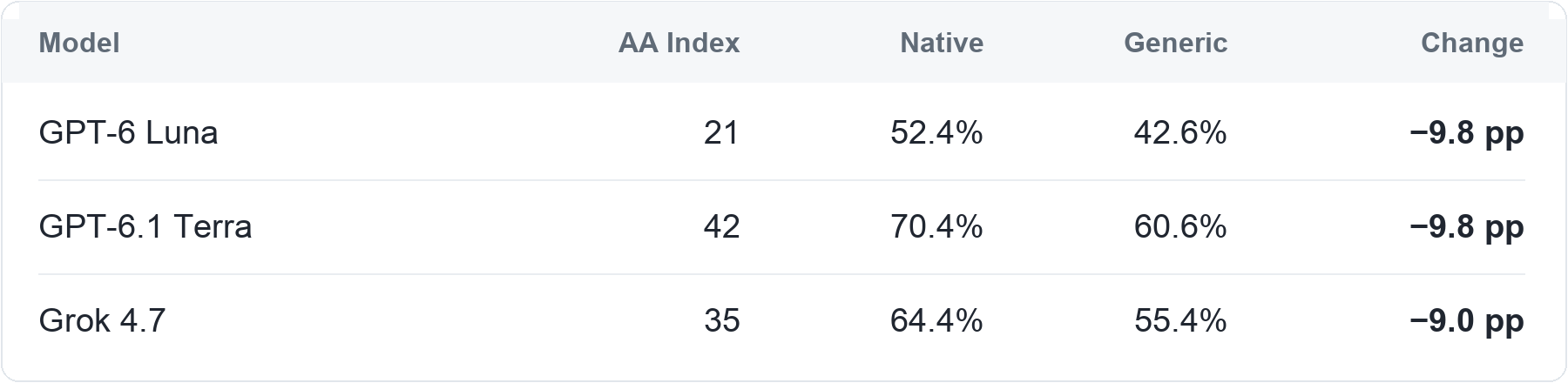
What struck me looking at this chart was how the really good models didn’t seem to lose much in the generic harness. To investigate further, I inspected the top losers and gainers by being put in a generic harness:
Largest generic-harness losses
Smallest generic-harness losses
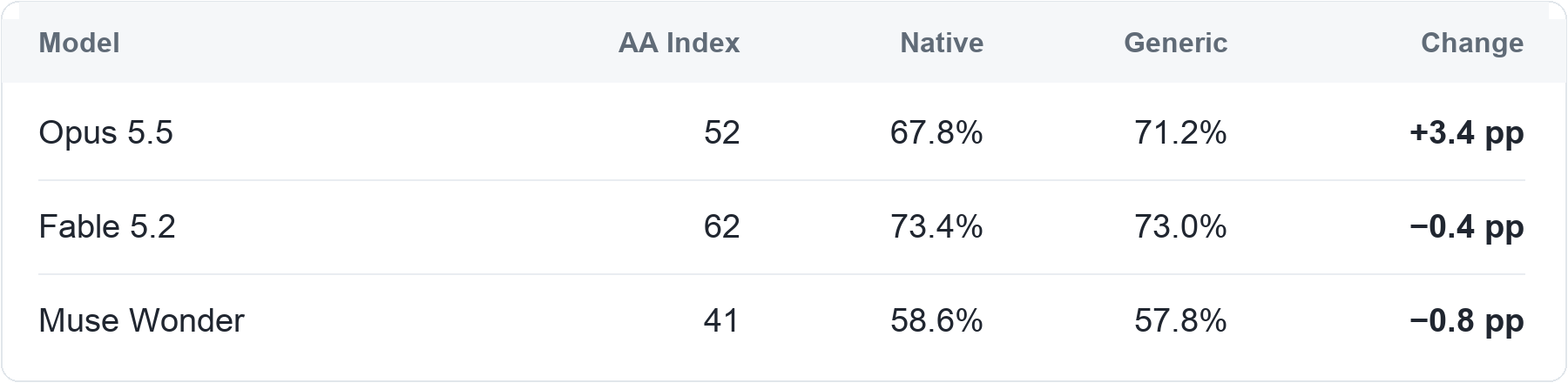
Indeed, it looks like there was an effect here. To investigate this further, I charted each model’s performance drop in the generic harness against its score on Artificial Analysis’ intelligence index:
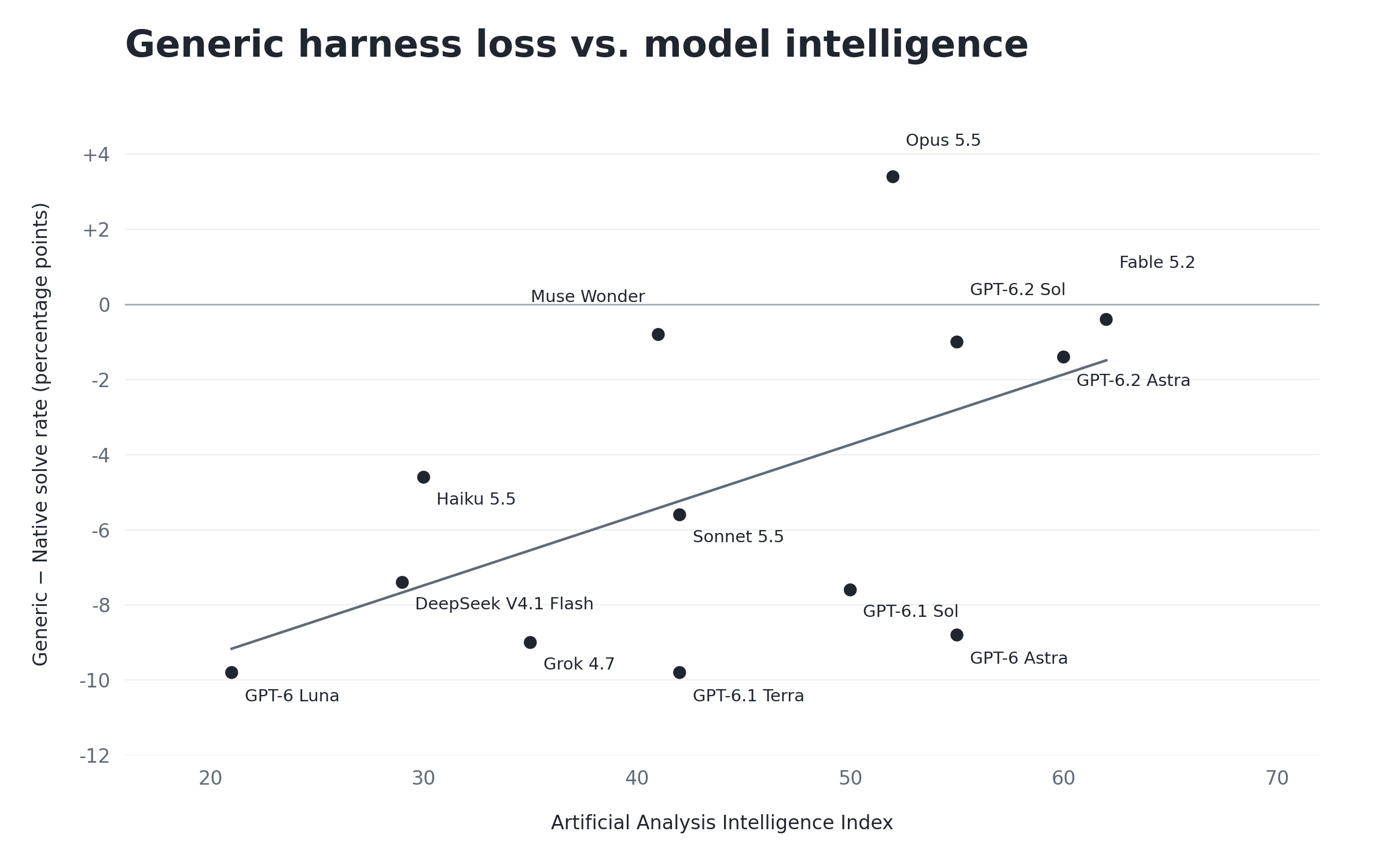
The p-val on this effect is 0.051 (I promise I just ran this once). The R² of the fit is 0.304.